Modern beekeeping requires more than just basic equipment. Whether you're managing a few backyard hives or overseeing a commercial apiary, the right optional tools can mean the difference between smooth operations and unnecessary challenges. This guide explores three critical categories of optional beekeeping tools—protective gear, organizational systems, and advanced smoker fuels—helping you make informed decisions that enhance safety, efficiency, and hive management outcomes.
Protecting Your Ankles: How to Choose Bee-Proof Boots for Different Environments
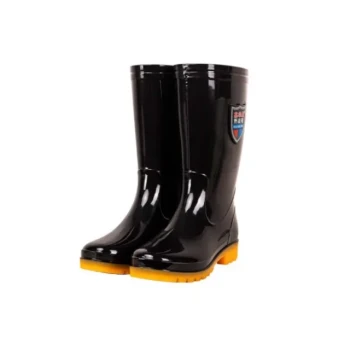
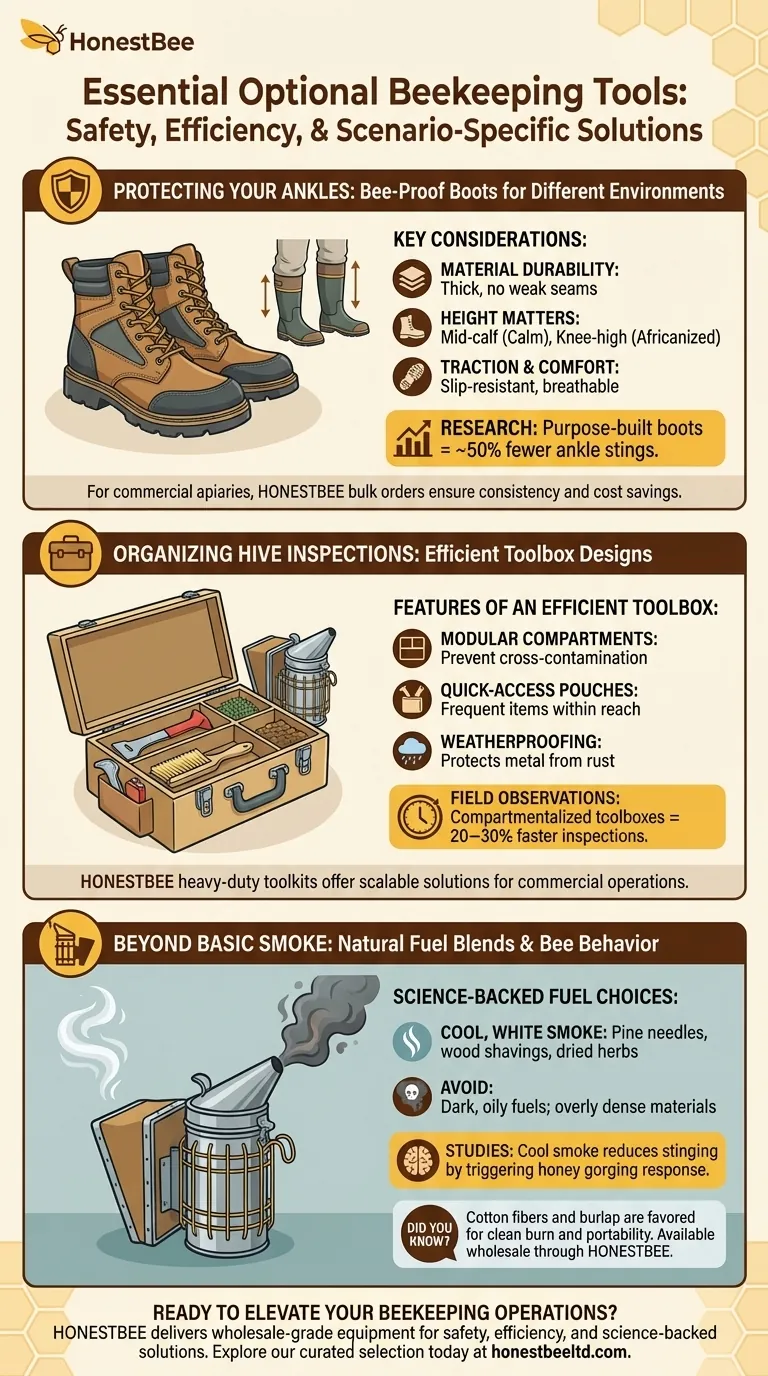
Bee stings on the ankles are more than just painful—they can lead to swelling, infections, and even allergic reactions. The right boots act as your first line of defense, but not all environments demand the same level of protection.
Key Considerations for Bee-Proof Boots
-
Material Durability:
- Thick leather or rubberized materials prevent stingers from penetrating.
- Avoid seams near the ankle where bees could target weak points.
-
Height Matters:
- Mid-calf boots suffice for calm European honeybees in controlled settings.
- Knee-high designs are non-negotiable for Africanized honeybees or dense foraging areas.
-
Traction and Comfort:
- Slip-resistant soles are crucial for wet grass or uneven terrain.
- Breathable linings reduce fatigue during long hive inspections.
Research shows that beekeepers wearing purpose-built boots experience roughly half as many ankle stings compared to those using generic work boots. Have you considered how your current footwear stacks up against these criteria?
For commercial apiaries, investing in bulk orders of standardized boots (like those from HONESTBEE) ensures consistency across teams while reducing long-term equipment costs.
Organizing Hive Inspections: Toolbox Designs That Save Time and Reduce Stress
A disorganized beekeeping kit isn’t just inconvenient—it prolongs hive exposure, stresses colonies, and increases the risk of misplaced tools. The right toolbox design turns inspections into streamlined processes.
Features of an Efficient Beekeeping Toolbox
- Modular Compartments: Separate tools (hive tools, brushes, queen catchers) to prevent cross-contamination of propolis or wax.
- Quick-Access Pouches: Keep frequently used items (smoker fuel, lighter) within reach without opening the main compartment.
- Weatherproofing: Moisture-resistant materials protect metal tools from rust in humid climates.
Field observations indicate that beekeepers using compartmentalized toolboxes complete inspections 20–30% faster than those relying on generic bags.
Pro Tip: Label compartments with color-coded tags to help assistants or seasonal workers locate tools efficiently.
For distributors supplying equipment to commercial operations, HONESTBEE’s heavy-duty toolkits offer scalable solutions that withstand daily use while keeping teams synchronized.
Beyond Basic Smoke: Natural Fuel Blends and Their Impact on Bee Behavior
Smoke is the cornerstone of defensive colony management, but the type of fuel you use determines its effectiveness. Poor-quality smoke can agitate bees instead of calming them.
Science-Backed Smoker Fuel Choices
-
Cool, White Smoke Producers:
- Pine needles and wood shavings ignite slowly, producing steady smoke that doesn’t overheat the hive.
- Dried herbs (e.g., lavender, eucalyptus) add calming phytochemicals to the smoke.
-
Materials to Avoid:
- Dark, oily fuels (e.g., treated lumber) create hot smoke that triggers aggression.
- Overly dense materials (e.g., green leaves) smolder unevenly, requiring constant bellows use.
Studies of defensive honeybee subspecies show that cool smoke reduces stinging incidents by triggering the bees’ instinct to gorge on honey—a survival response that makes them less likely to guard the hive entrance.
Did You Know? Cotton fibers and burlap are favored by commercial beekeepers for their clean burn and portability. Stocking these fuels in bulk (available through HONESTBEE’s wholesale network) ensures consistent performance across large apiaries.
Ready to Elevate Your Beekeeping Operations?
Every tool you choose impacts your bees’ well-being and your productivity. Whether you’re outfitting a team or optimizing solo inspections, HONESTBEE delivers wholesale-grade equipment designed for commercial beekeepers and distributors who prioritize safety, efficiency, and science-backed solutions.
Explore our curated selection today—because advanced beekeeping starts with the right tools.
Products You Might Be Looking For:
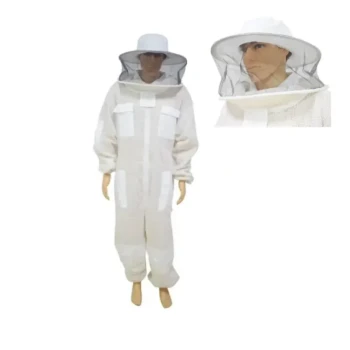
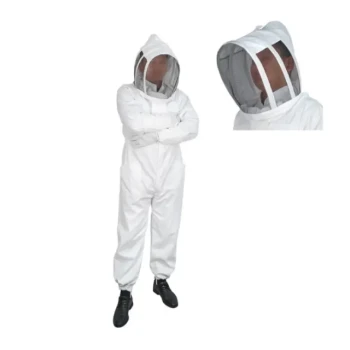
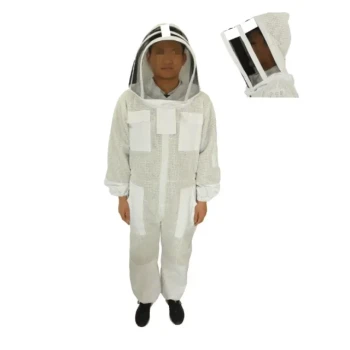
Explore professional beekeeping protective gear
Visuelle Anleitung
Ähnliche Produkte
- Professionelle PVC-Imkerschuhe mit integrierter rutschfester Sohle
- Weiße PVC-Imkerschuhe mit rutschfester Sicherheitssohle
- Ziegenleder-Imkerhandschuhe, stichfest, mit Segeltuchärmel
- Robuste rote Gummi-Imkerhandschuhe mit belüfteten Baumwollärmeln
- Premium dreilagiger belüfteter Bienenanzug mit Rundhut
Ähnliche Artikel
- How to Choose Beekeeping Shoes: Safety Features That Actually Work
- Wie Sie Bienenstockschuhe auswählen, die Sie kühl und geschützt halten
- So wählen Sie Bienenstiefel aus: Kriterien für Sicherheit, Haltbarkeit und Komfort erklärt
- Wie man Bienenstock-Schuhwerk auswählt, das Stiche abwehrt, ohne auf Komfort zu verzichten
- How to Choose Beekeeping Footwear That Prevents Stings Without Sacrificing Comfort