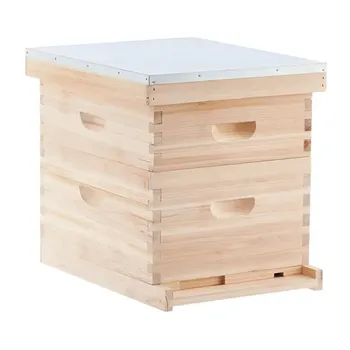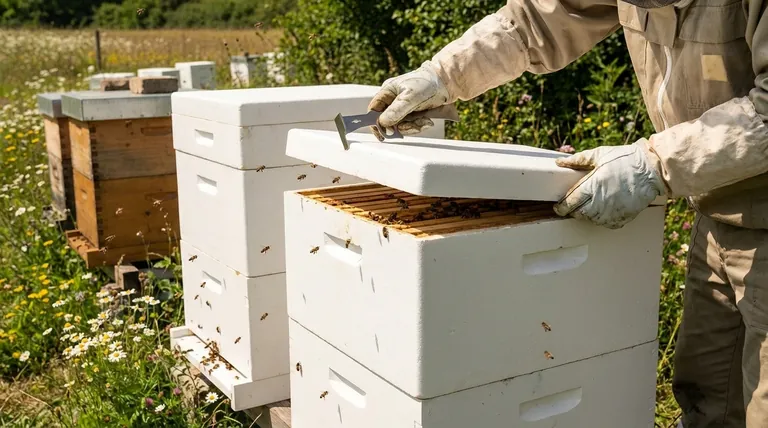
Modern beekeepers face a critical choice: stick with traditional wooden hives or switch to polystyrene models. Research shows polystyrene hives deliver measurable advantages in colony survival, honey production, and operational costs—without the environmental tradeoffs many assume.
Why Polystyrene Outperforms Traditional Beehives
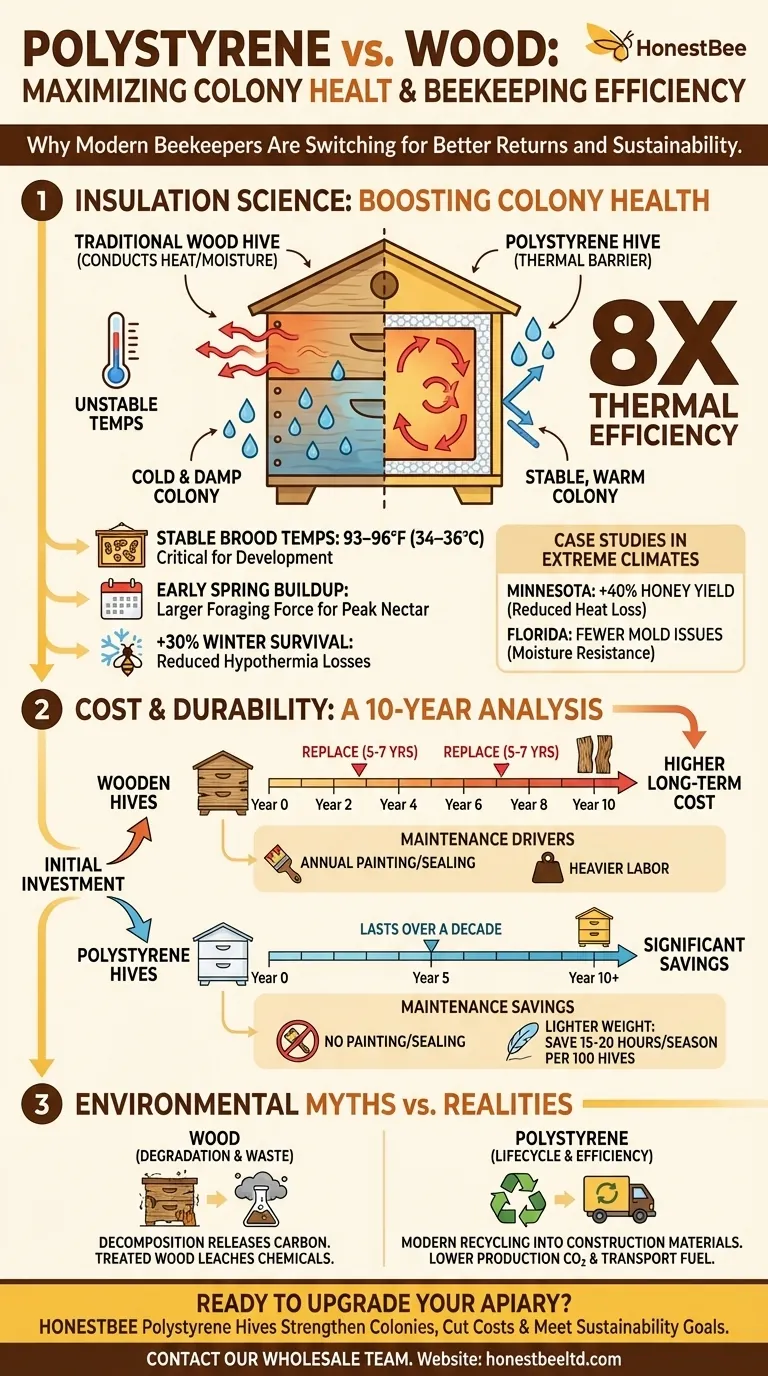
Polystyrene hives leverage material science to create optimal conditions for honeybees. Unlike wood, which conducts heat and moisture, polystyrene’s closed-cell structure acts as a thermal barrier.
Insulation Science: How 8x Thermal Efficiency Boosts Honey Production
- Stable brood temperatures: Maintains the 93–96°F (34–36°C) range critical for larval development, even during external temperature swings. Bees expend less energy regulating hive climate, conserving resources for honey production.
- Early spring buildup: Colonies in polystyrene hives often start brood rearing weeks earlier than those in wooden hives. This head start translates to larger foraging forces during peak nectar flows.
- Winter survival rates: Superior insulation reduces colony losses from hypothermia. Beekeepers report overwintering success rates improving by as much as 30% in polystyrene hives.
From Lab to Field: Beekeeper Case Studies in Extreme Climates
- Northern apiaries: A Minnesota beekeeper documented 40% higher honey yields after switching to polystyrene, attributing this to reduced heat loss during cold snaps.
- Humid regions: Florida beekeepers note fewer mold issues, as polystyrene’s moisture resistance prevents internal condensation—a common cause of wood rot and colony stress.
Cost and Durability: A 10-Year Ownership Analysis
While polystyrene hives have a slightly higher upfront cost, their longevity and reduced maintenance needs lead to significant savings.
Minimizing Hive Replacements: Real-World Longevity Data
- Wooden hives: Typically require replacement every 5–7 years due to warping, rot, or pest damage.
- Polystyrene hives: Last over a decade with proper care. Their resistance to moisture and insects eliminates common degradation factors.
Maintenance Savings: Time and Resource Comparisons
- No painting or sealing: Unlike wood, polystyrene doesn’t require annual treatments to prevent weathering.
- Lighter weight: Reduces labor during hive inspections and transport. Commercial operators report saving 15–20 hours per season per 100 hives.
Environmental Myths vs. Realities
Critics often claim polystyrene hives are less sustainable than wood. However, lifecycle analyses reveal a more nuanced picture.
Lifecycle Analysis: Polystyrene Recycling vs. Wood Degradation
- Wood waste: Decomposing hives release stored carbon, and treated wood may leach chemicals into soil.
- Polystyrene recycling: Modern recycling programs grind used hives into pellets for reuse in construction materials, diverting waste from landfills.
Carbon Footprint: Production and Disposal Impacts
- Manufacturing: Polystyrene production emits less CO2 than kiln-drying lumber for wooden hives.
- Transport efficiency: Their lighter weight reduces fuel consumption during shipping—a key factor for large-scale operations.
Ready to upgrade your apiary’s efficiency? HONESTBEE’s polystyrene beehives help commercial beekeepers strengthen colonies, cut maintenance costs, and meet sustainability goals. [Contact our wholesale team] to discuss volume pricing for your operation.
Visuelle Anleitung
Ähnliche Produkte
- Professionelle isolierte Bienenstöcke aus Kunststoff
- Langlebige, ineinander greifende Kunststoffbeutenverbinder für die Imkerei
- Klar Schwarz Einfach Polystyrol Bienenkönigin Veredelung Zelle Tassen Keine Lug für Biene Königin Cup
- Kunststoff-Bienenrahmen Bienenzucht-Bienenstockrahmen für den Großhandel
- Styropor Mini Begattungs Nuc Box mit Frames Feeder Styropor Bienenstöcke 3 Frame Nuc Box
Ähnliche Artikel
- Bienenstöcke aus Kunststoff: Eine kluge Investition für moderne Imker
- Optimierung der Bienenstockisolierung: Ein datengesteuerter Leitfaden für Imker
- Der Leitfaden für Imker zur Überwinterung von Bienenstöcken: Warum Feuchtigkeit, nicht Kälte, der Feind ist
- Isolierung von Bienenstöcken für das Überleben im Winter: Ein regionaler Leitfaden für Imker
- Wie man die Isolierung von Bienenstöcken für ein maximales Überleben der Bienen im Winter zeitlich abstimmt