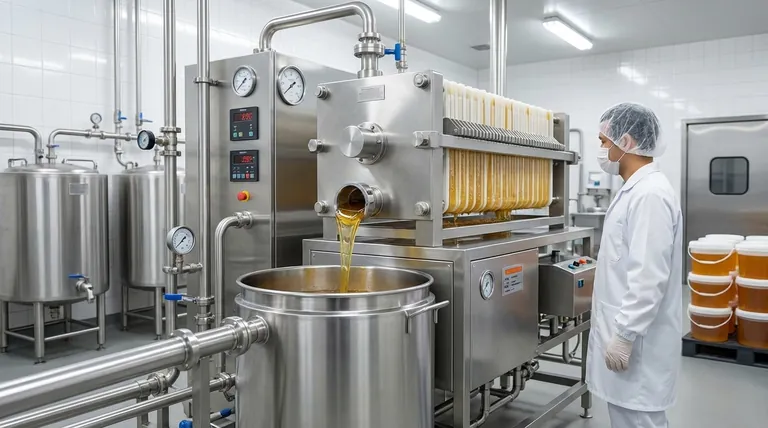
For commercial beekeepers and honey processors, achieving crystal-clear honey without compromising its natural enzymes or violating food safety regulations requires precision filtration methods. This guide explores the science-backed techniques that balance visual appeal, nutrient retention, and compliance.
The Science Behind Honey Filtration
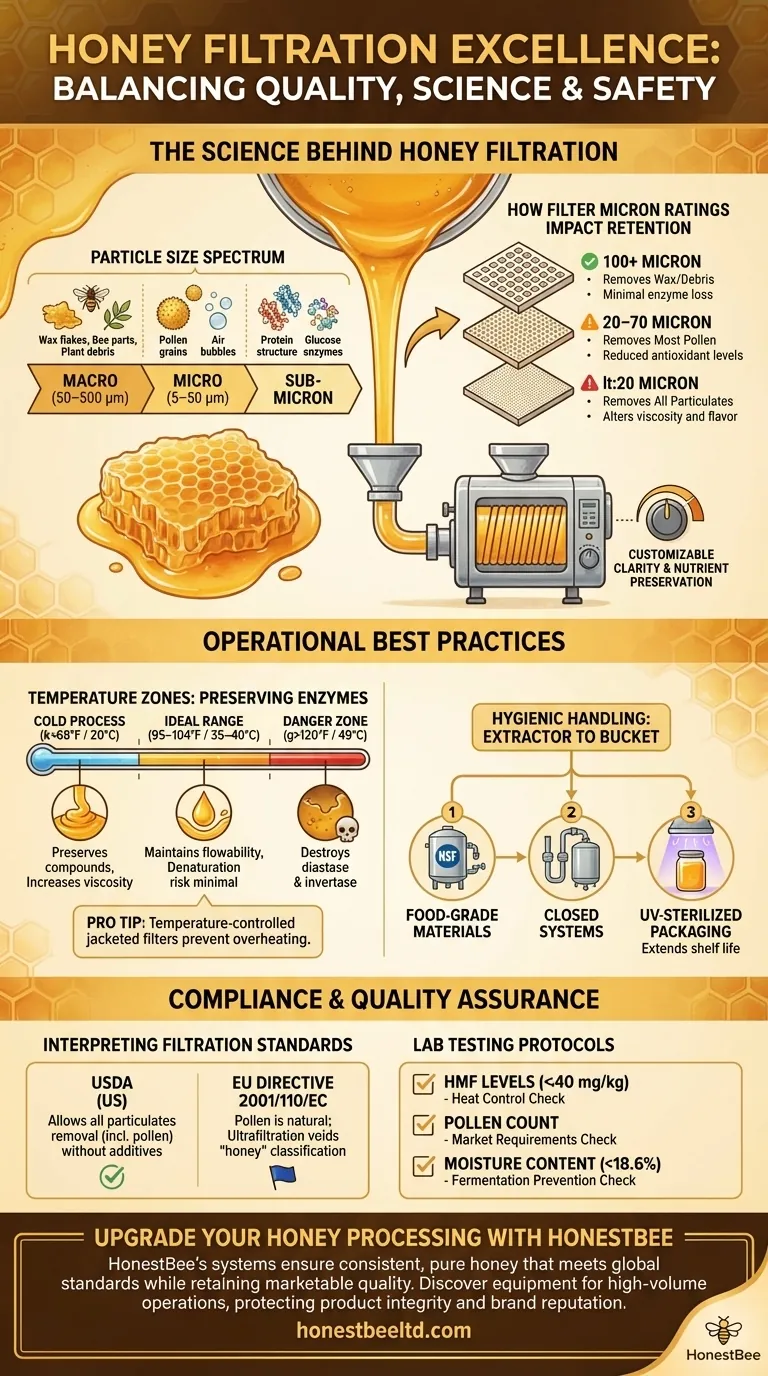
Particle Size Spectrum in Raw Honey
Raw honey contains diverse particulates:
- Macro particles (50–500 microns): Wax flakes, bee parts, and plant debris
- Micro particles (5–50 microns): Pollen grains and air bubbles
- Sub-micron elements: Proteins and enzymes like glucose oxidase
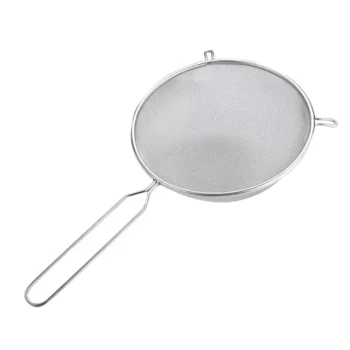
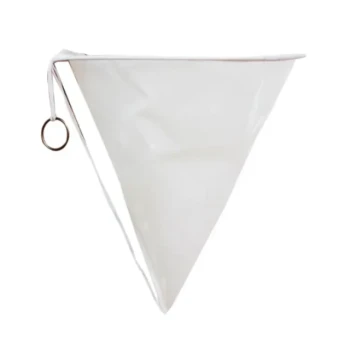
Research shows that traditional cheesecloth filtration (200+ microns) only removes visible impurities, while commercial-grade systems target finer contaminants.
How Filter Micron Ratings Impact Pollen Retention
Filter porosity directly affects honey composition:
| Micron Rating | Removes | Nutrient Impact |
|---|---|---|
| 100+ | Wax/debris | Minimal enzyme loss |
| 20–70 | Most pollen | Reduced antioxidant levels |
| <20 | All particulates | Alters viscosity and flavor |
A honey filtering machine with adjustable micron settings allows beekeepers to customize clarity versus nutrient preservation—critical for markets valuing unpasteurized honey.
Operational Best Practices
Temperature Zones: Preserving Enzymes During Filtration
Heat management prevents honey degradation:
- Ideal range: 95–104°F (35–40°C) maintains flowability without denaturing enzymes
- Danger zone: Above 120°F (49°C) destroys diastase and invertase
- Cold filtration alternative: Slow-processed at <68°F (20°C) preserves compounds but increases viscosity
Pro tip: Stainless steel filters with temperature-controlled jackets prevent localized overheating.
Hygienic Handling from Extractor to Bucket
Contamination risks multiply during transfer. Key safeguards:
- Food-grade materials: Use NSF-certified tanks and fittings
- Closed systems: Reduce airborne yeast exposure
- UV-sterilized packaging: Extends shelf life for bottled honey
Compliance & Quality Assurance
Interpreting USDA/EU Filtration Standards
Regulatory bodies define "filtered honey" differently:
- USDA: Allows removal of all particulates (including pollen) if no additives are introduced
- EU Directive 2001/110/EC: Proclaims pollen as a natural component; ultrafiltration voids "honey" classification
Lab Testing Protocols for Filtered Honey
Third-party verification should check:
- HMF levels (<40 mg/kg indicates proper heat control)
- Pollen count (varies by market requirements)
- Moisture content (<18.6% prevents fermentation)
Upgrade Your Honey Processing
HONESTBEE’s commercial filtration systems help apiaries and distributors produce consistently pure honey that meets global standards while retaining marketable qualities. Discover equipment designed for high-volume operations that protect your product’s integrity—and your brand’s reputation.
Have questions about tailoring filtration to your honey’s unique properties? Our beekeeping specialists can guide you toward compliant, quality-focused solutions.
Visuelle Anleitung
Ähnliche Produkte
- Elektrische Doppelwand-Honig-Filteranlage Reinigungsanlage für Honigverarbeitungsanlage
- Professionelle Edelstahl-Honigfiltriermaschine mit Wasserbadheizung für die Imkerei
- 0,5T Honig-Luftentfeuchter-Trockner mit Vakuumheizung und Verdickungsfiltermaschine
- Profi-Edelstahl-Honigfilter mit Stützgriff
- Honigkonzentrierungs- und Filter-Luftentfeuchter mit 2 Tonnen Kapazität für Honig
Ähnliche Artikel
- Vom Chaos zur Klarheit: Physik und Psychologie der Honigfiltration
- Der klebrige Flaschenhals: Warum Ihre Honigfiltration fehlschlägt und wie Sie sie dauerhaft beheben
- Warum Ihre Honigfiltration langsam und inkonsistent ist – und wie Sie sie endgültig beheben
- Optimierung der Honigfiltration: Wie Maschengrößen die Qualität und Marktattraktivität beeinflussen
- So wählen Sie den richtigen Honigfilter für Ihren Bienenbetrieb aus