A well-designed hive stand is more than just a platform—it’s your first line of defense against moisture, pests, and instability. This guide breaks down the science-backed strategies beekeepers use to select, install, and maintain stands that extend hive lifespans and reduce colony stressors.
The Critical Role of Hive Stands in Beekeeping
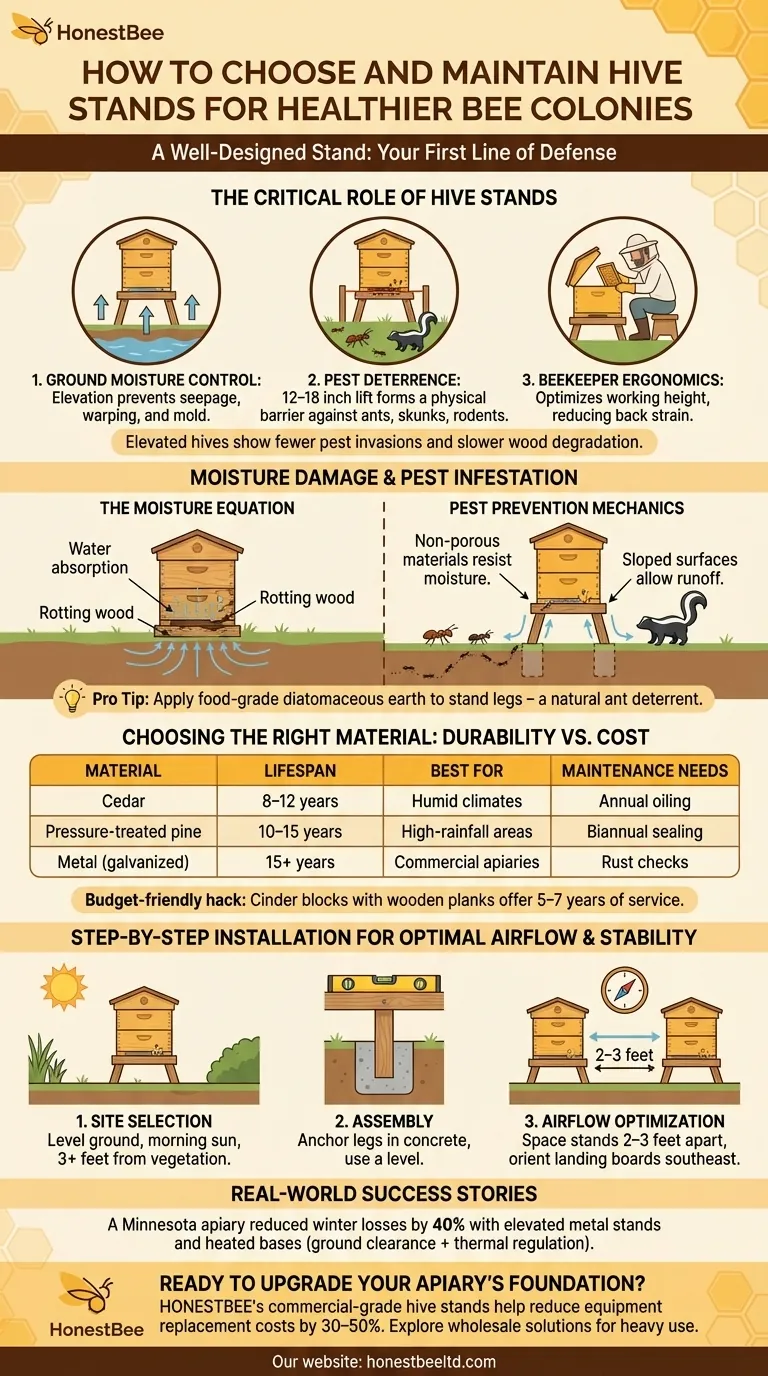
Hive stands silently solve three major beekeeping challenges:
- Ground moisture control: Elevation prevents rainwater seepage and dampness, which can warp wood and promote mold.
- Pest deterrence: A 12–18 inch lift creates a physical barrier against ants, skunks, and rodents.
- Beekeeper ergonomics: Reduces back strain during inspections by optimizing working height.
Research shows elevated hives experience fewer pest invasions and slower wood degradation compared to ground-level setups.
How Elevation Prevents Moisture Damage and Pest Infestation
The moisture equation
Hives placed directly on soil absorb groundwater capillary action, accelerating wood rot. Stands with:
- Non-porous materials (e.g., pressure-treated wood, metal legs) resist moisture absorption.
- Sloped surfaces allow rainwater runoff instead of pooling.
Pest prevention mechanics
Ants and small predators rely on direct ground contact to invade hives. Elevation disrupts their:
- Scent trails (ants lose pheromone pathways when forced to climb)
- Access routes (skunks avoid exposed climbing)
Pro tip: Apply food-grade diatomaceous earth to stand legs—a natural ant deterrent that’s harmless to bees.
Choosing the Right Material: Durability vs. Cost Considerations
| Material | Lifespan | Best For | Maintenance Needs |
|---|---|---|---|
| Cedar | 8–12 years | Humid climates | Annual oiling |
| Pressure-treated pine | 10–15 years | High-rainfall areas | Biannual sealing |
| Metal (galvanized) | 15+ years | Commercial apiaries | Rust checks |
Budget-friendly hack: Cinder blocks with wooden planks offer 5–7 years of service at minimal cost.
Step-by-Step Installation for Optimal Airflow and Stability
-
Site selection
- Level ground with morning sun exposure
- 3+ feet from vegetation (reduces pest highways)
-
Assembly
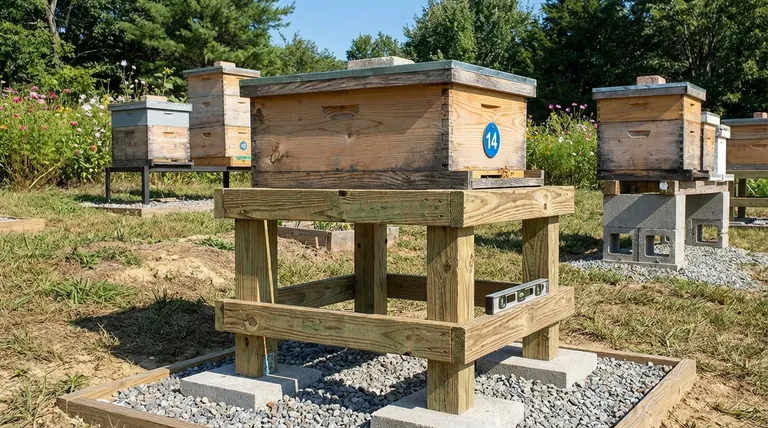
- Anchor legs in concrete footings for wind resistance
- Use a carpenter’s level to prevent honeycomb misalignment
-
Airflow optimization
- Space stands 2–3 feet apart for bee traffic lanes
- Orient landing boards southeast (bees prefer sun-warmed takeoff paths)
Real-World Success Stories: Hive Stands in Action
A Minnesota apiary reduced winter hive losses by 40% after switching to elevated metal stands with heated bases. The combination of:
- Ground clearance (prevented snowmelt infiltration)
- Thermal regulation (reduced condensation inside hives)
proved decisive in colony survival rates.
Ready to upgrade your apiary’s foundation? HONESTBEE’s commercial-grade hive stands help distributors and large-scale beekeepers reduce equipment replacement costs by 30–50%. Explore wholesale solutions designed for heavy use and extreme weather resilience.
Visuelle Anleitung
Ähnliche Produkte
- Metallbienenstockfüße Bienenstockständer für Ameisenschutz
- Bienenstockständer aus Kunststoff für die Imkerei
- Bienenstockständer aus Metall Bienenkastenständer für die Imkerei
- Professioneller ameisensicherer Bienenstockständer mit integriertem Graben für die Imkerei
- Kunststoff-Bienenrahmen Bienenzucht-Bienenstockrahmen für den Großhandel
Ähnliche Artikel
- So stabilisieren Sie Bienenstockständer in feuchtem Boden: Bewährte Techniken für Imker
- How to Choose and Install a Beehive Stand for Pest Control and Colony Health
- Die unsichtbare Architektur einer produktiven Bienenweide: Warum die Höhe Ihres Bienenstockständers eine Entscheidung für das Systemdesign ist
- Die unsichtbare Stiftung: Warum der Bienenstockständer den Erfolg Ihres Bienenhauses bestimmt
- Über den Tellerrand hinaus: Wie ein einfacher Ständer Kaskadenversagen in der Bienenzucht verhindert