How to Optimize Your Hive’s Productivity Year-Round with Proven Beekeeping Strategies
Seasonal shifts dramatically impact Langstroth hive performance. This guide distills actionable steps to align your management with nature’s rhythms—boosting honey yields while preventing costly colony losses.
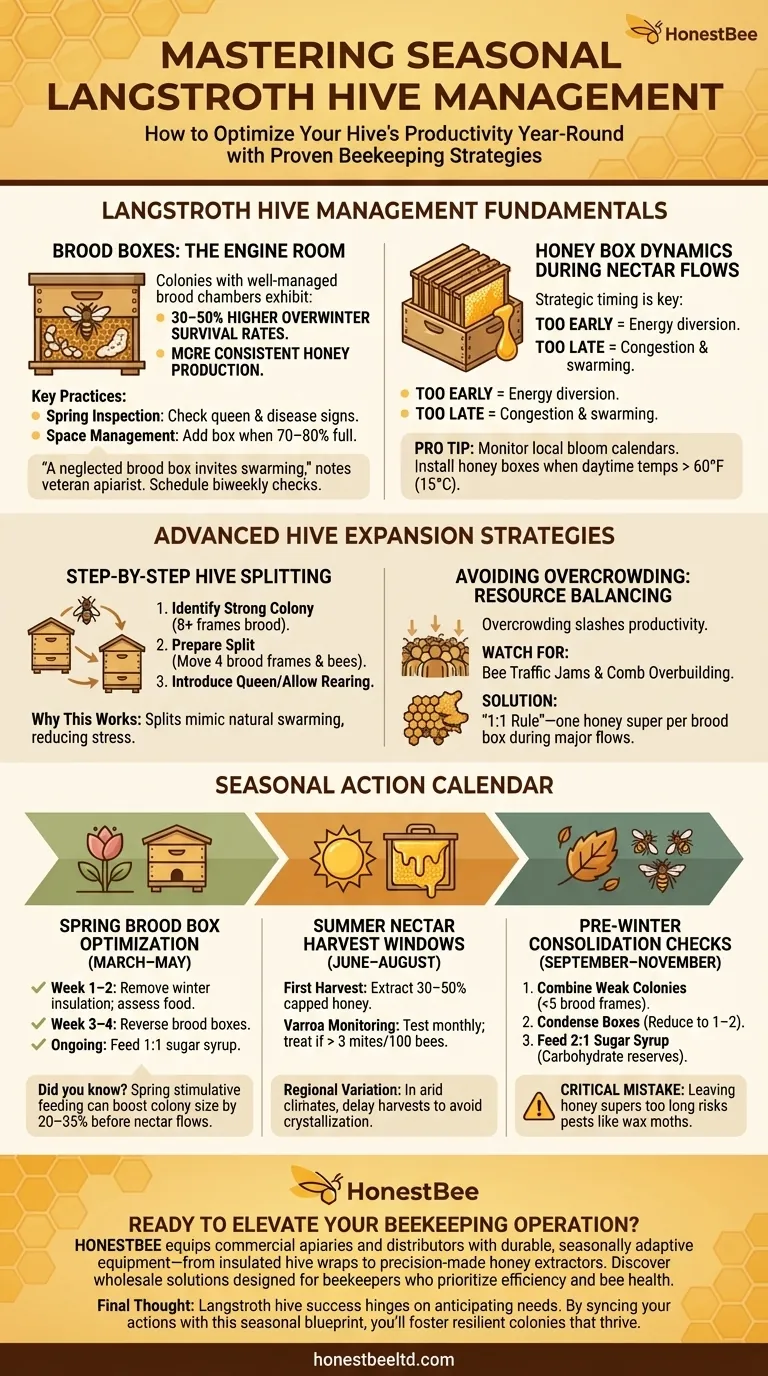
Langstroth Hive Management Fundamentals
The Role of Brood Boxes in Colony Health
Brood boxes are the engine room of your hive. Research shows colonies with well-managed brood chambers exhibit:
- 30–50% higher overwinter survival rates
- More consistent honey production due to balanced worker bee populations
Key Practices:
- Spring Inspection: Check for queen viability (egg patterns) and disease signs (e.g., spotty brood).
- Space Management: Add a second brood box when 70–80% of frames are occupied—typically mid-spring in temperate climates.
"A neglected brood box invites swarming," notes a veteran apiarist. Schedule biweekly checks during peak growth.
Honey Box Dynamics During Nectar Flows
Honey supers require strategic timing:
- Add too early: Bees divert energy to drawing comb instead of foraging.
- Add too late: Congestion triggers swarming.
Pro Tip: Monitor local bloom calendars. Install honey boxes when blackberry or clover flows begin, usually when daytime temperatures consistently exceed 60°F (15°C).
Advanced Hive Expansion Strategies
Step-by-Step Hive Splitting for Sustainable Growth
Splitting mitigates swarming while growing your apiary:
- Identify a Strong Colony: 8+ frames of brood, abundant pollen stores.
- Prepare the Split: Move 4 brood frames (with nurse bees) to a new hive box. Include a frame of honey/pollen.
- Introduce a New Queen or Allow Emergency Queen Rearing.
Why This Works: Splits mimic natural swarming, reducing stress on the original colony.
Avoiding Overcrowding: Resource Balancing Principles
Overcrowding slashes productivity. Watch for:
- Bee Traffic Jams: Bees clustering at the entrance indicate space shortages.
- Comb Overbuilding: Irregular, burr-like comb in supers signals disorganization.
Solution: Follow the "1:1 Rule"—one honey super per brood box during major flows.
Seasonal Action Calendar
Spring Brood Box Optimization
March–May Priorities:
✔ Week 1–2: Remove winter insulation; assess food stores.
✔ Week 3–4: Reverse brood boxes if lower chamber is underutilized.
✔ Ongoing: Feed 1:1 sugar syrup if natural pollen sources are scarce.
Did you know? Spring stimulative feeding can boost colony size by 20–35% before nectar flows.
Summer Nectar Harvest Windows
June–August Tactics:
- First Harvest: Extract 30–50% of capped honey to free up comb space.
- Varroa Monitoring: Test mite levels monthly; treat if thresholds exceed 3 mites per 100 bees.
Regional Variation: In arid climates, delay harvests until late summer to avoid honey crystallization.
Pre-Winter Consolidation Checks
September–November Prep:
- Combine Weak Colonies: Merge hives with fewer than 5 brood frames.
- Condense Boxes: Reduce to 1–2 brood chambers for easier winter clustering.
- Feed 2:1 Sugar Syrup: Build carbohydrate reserves without stimulating brood rearing.
Critical Mistake to Avoid: Leaving honey supers on too long risks attracting pests like wax moths.
Ready to Elevate Your Beekeeping Operation?
HONESTBEE equips commercial apiaries and distributors with durable, seasonally adaptive equipment—from insulated hive wraps to precision-made honey extractors. Discover wholesale solutions designed for beekeepers who prioritize efficiency and bee health.
Final Thought: Langstroth hive success hinges on anticipating needs before they arise. By syncing your actions with this seasonal blueprint, you’ll foster resilient colonies that thrive in every phase of the year.
Visuelle Anleitung
Ähnliche Produkte
- Hochleistungs-Langstroth-Bienenstöcke für die professionelle globale Imkerei
- Langstroth Honigbienenkasten Beutenkästen für verschiedene Tiefen
- Australische Langstroth-Bienenkästen für den Imkergroßhandel
- Langstroth Style Horizontal Top Bar Bienenstock für Großhandel
- Massive Bodenplatte Australisches Kiefernholz Langstroth Bodenplatte für Großhandel
Ähnliche Artikel
- So wählen Sie Langstroth-Beutengrößen für Ergonomie, Effizienz und Bienengesundheit aus
- Flow Hive vs. Langstroth: Wann zahlt sich der höhere Preis wirklich aus?
- Wie das Design der Langstroth-Beute das Wachstum von Bienenkolonien und die Honigproduktion optimiert
- How the Langstroth Hive Solves Modern Beekeeping’s Biggest Challenges
- Wie man zwischen Top Bar und Langstroth Bienenstöcken für eine mühelose Imkerei wählt













