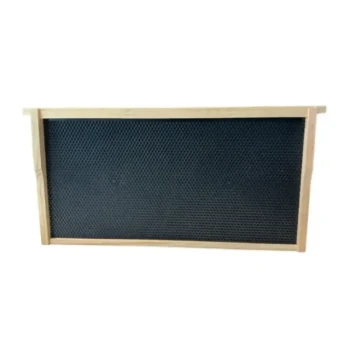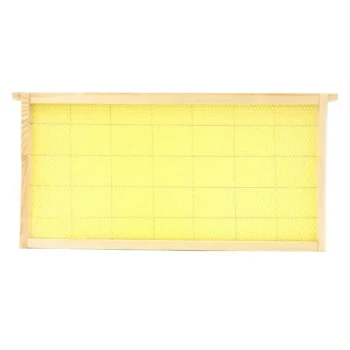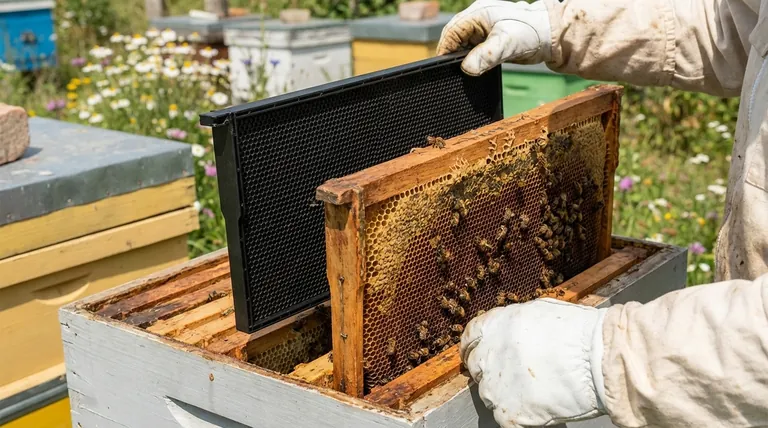
For commercial apiaries and equipment distributors, every material choice impacts operational efficiency and long-term profitability. While wooden frames have been a traditional staple in beekeeping, modern plastic frames demonstrate measurable advantages in durability, cost-efficiency, and adaptability—especially in demanding environments.
Plastic vs. Wooden Frames: A Long-Term Investment Perspective
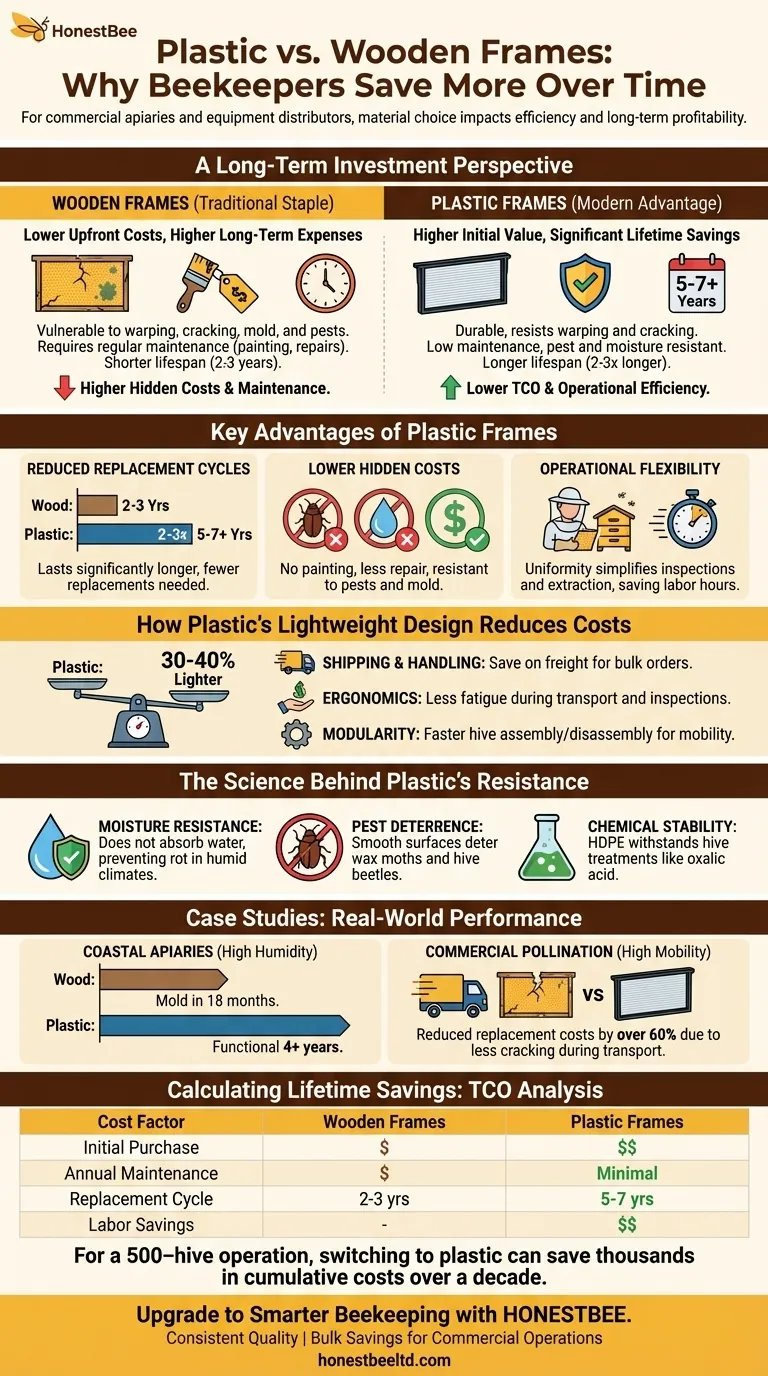
Beekeepers often face a critical decision: invest in lower upfront costs (wood) or prioritize lifetime value (plastic). Research and field data reveal plastic frames outperform wood in three key areas:
- Reduced Replacement Cycles: Plastic frames resist warping and cracking, lasting 2–3x longer than wood in comparable conditions.
- Lower Hidden Costs: Wood requires regular maintenance (painting, repairs) and is vulnerable to hive beetles and mold.
- Operational Flexibility: Plastic’s uniformity simplifies hive inspections and honey extraction, saving labor hours.
For high-volume operations, these factors compound into significant savings.
How Plastic’s Lightweight Design Reduces Installation and Mobility Costs
Plastic frames weigh approximately 30–40% less than wooden equivalents, creating cascading efficiencies:
- Shipping & Handling: Distributors save on freight costs when shipping bulk orders.
- Ergonomics: Beekeepers report less fatigue during hive migrations or large-scale inspections.
- Modularity: Lightweight frames enable quicker hive assembly/disassembly, critical for commercial pollination services.
Anecdotal evidence from migratory beekeepers highlights plastic’s advantage: colonies transported over long distances experience fewer frame failures compared to wood.
The Science Behind Plastic’s Resistance to Decay and Pests
Plastic frames eliminate vulnerabilities inherent to organic materials:
- Moisture Resistance: Unlike wood, plastic doesn’t absorb water, preventing rot in humid climates.
- Pest Deterrence: Wax moths and small hive beetles struggle to burrow into smooth plastic surfaces.
- Chemical Stability: High-density polyethylene (HDPE) withstands hive treatments like oxalic acid without degradation.
Studies in subtropical apiaries show plastic frames maintain structural integrity after 5+ years, while wooden frames often require replacement within 2–3 years.
Case Studies: Plastic Frames in High-Humidity and High-Traffic Environments
-
Coastal Apiaries (High Humidity):
- Wooden frames in Florida apiaries showed mold infiltration within 18 months; plastic frames remained functional beyond 4 years with minimal cleaning.
-
Commercial Pollination (High Mobility):
- Almond pollination contractors using plastic frames reduced frame replacement costs by over 60% per season due to reduced cracking during transport.
These examples underscore plastic’s reliability where environmental stressors are frequent.
Calculating Lifetime Savings: Initial Cost vs. Maintenance for Wooden Alternatives
While plastic frames may cost slightly more upfront, their total cost of ownership (TCO) is often lower:
| Cost Factor | Wooden Frames | Plastic Frames |
|---|---|---|
| Initial Purchase | $–$$ | $$–$$$ |
| Annual Maintenance | $ (painting, repairs) | Minimal |
| Replacement Cycle | 2–3 years | 5–7 years |
| Labor Savings | – | $$ (faster inspections) |
For a 500-hive operation, switching to plastic can save thousands in cumulative maintenance and replacement costs over a decade.
Upgrade to Smarter Beekeeping with HONESTBEE
Commercial beekeepers and distributors trust HONESTBEE’s plastic frames for their durability and cost-saving design. Whether managing large-scale pollination contracts or supplying equipment to retailers, our frames deliver:
- Consistent Quality: Engineered for heavy use in diverse climates.
- Bulk Savings: Wholesale pricing optimizes budgets for high-volume buyers.
Explore how HONESTBEE’s solutions can streamline your operation—contact our team for bulk order quotes today.
Products You Might Be Looking For:
View durable plastic beekeeping frames
Explore auto-flow plastic hive frames
Visuelle Anleitung
Ähnliche Produkte
- Ergonomisches Kunststoffrahmen-Abstandshalterwerkzeug für die schnelle Bienenstockverwaltung
- Kunststoff-Bienenrahmen Bienenzucht-Bienenstockrahmen für den Großhandel
- Zusammengesetzte hölzerne Bienenstöcke mit Kunststofffundament für Langlebigkeit und Komfort von HONESTBEE
- Bienenfundament aus lebensmittelechtem Kunststoff für Bienenstöcke
- Langlebiger Kunststoff-Rahmenabstandshalter
Ähnliche Artikel
- Wie man die wichtigsten Imkerwerkzeuge sicher und effizient beherrscht
- Die menschliche Schnittstelle: Warum die Ruhe eines Imkers das ultimative Bienenstockwerkzeug ist
- Wie Kunststoffrahmen die Bienengesundheit stärken und traditionelle Materialien übertreffen
- Die unsichtbare Architektur: Warum moderne Bienenstöcke auf Kunststoffrahmen setzen
- Die Physik des Versagens: Warum moderne Bienenstöcke von Holz auf Kunststoffrahmen umsteigen