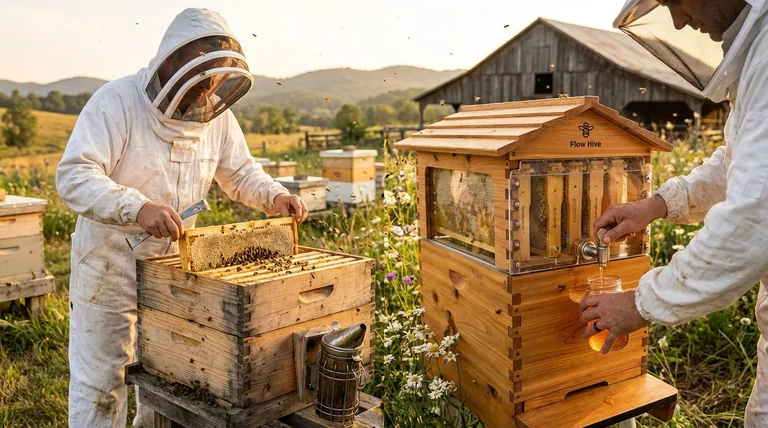
Beekeepers face a critical decision when selecting hive systems: the innovative Flow Hive or the time-tested Langstroth. This comparison examines how each design impacts efficiency, cost, and daily management—helping you align your choice with practical beekeeping objectives.
Understanding Hive Design Impacts on Beekeeping
How Roof Shapes Affect Hive Protection and Longevity
Both systems prioritize weather resistance, but their approaches differ:
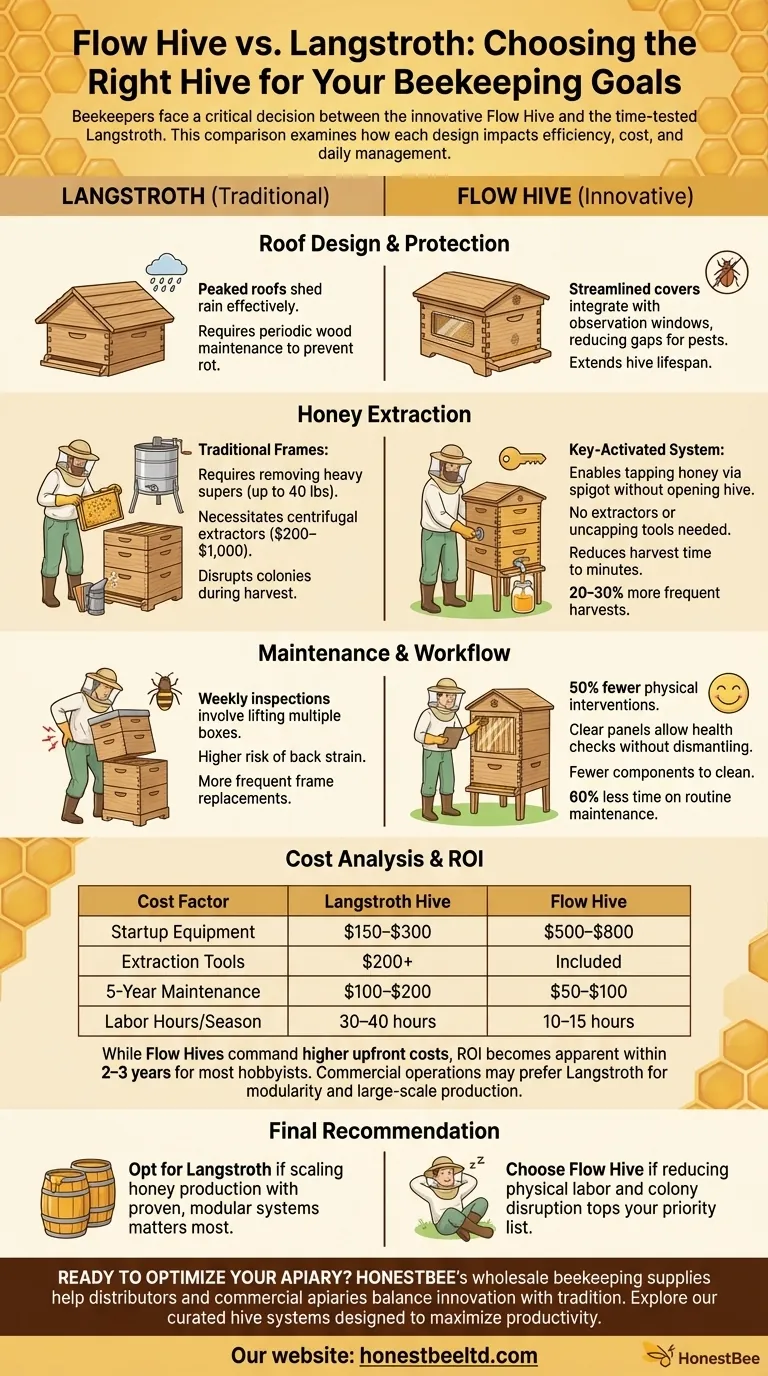
- Langstroth's peaked roofs shed rain effectively but require periodic wood maintenance to prevent rot.
- Flow Hive's streamlined covers integrate with observation windows, reducing gaps where pests might enter.
Research shows proper roof design extends hive lifespan by several years, making material durability a key factor for long-term beekeepers.
Honey Extraction: Traditional Frames vs. Flow’s On-Demand System
The core distinction lies in harvesting mechanics:
Langstroth Traditional Frames
- Require removing heavy supers (up to 40 lbs when full)
- Necessitate centrifugal extractors (a $200–$1,000 investment)
- Disrupt bee colonies during each harvest
Flow Hive’s Key-Activated System
- Enables tapping honey via spigot without opening the hive
- Eliminates need for extractors or uncapping tools
- Reduces harvest time from hours to minutes
A study of small-scale apiaries found Flow Hive users harvested 20–30% more frequently due to reduced labor—a significant advantage for beekeepers prioritizing yield with minimal disturbance.
Practical Considerations for Beekeepers
Maintenance Effort and Beekeeper Workflow Comparison
Langstroth Workflow
- Weekly inspections involve lifting multiple boxes
- Higher risk of back strain from heavy lifting
- More frequent frame replacements due to wax buildup
Flow Hive Advantages
- 50% fewer physical interventions during inspections
- Clear panels allow health checks without dismantling the hive
- Fewer components to clean between seasons
For urban beekeepers or those with limited mobility, Flow’s ergonomic design often proves transformative. As one commercial distributor noted, "Beekeepers switching from Langstroth report spending 60% less time on routine maintenance."
Cost Analysis: Initial Investment vs. Long-Term ROI
| Cost Factor | Langstroth Hive | Flow Hive |
|---|---|---|
| Startup Equipment | $150–$300 | $500–$800 |
| Extraction Tools | $200+ | Included |
| 5-Year Maintenance | $100–$200 | $50–$100 |
| Labor Hours/Season | 30–40 hours | 10–15 hours |
While Flow Hives command higher upfront costs, their ROI becomes apparent within 2–3 years for most hobbyists. Commercial operations using Langstroth may still prefer its modularity for large-scale honey production (5–10 gallons per hive annually vs. Flow’s 3–7 gallons).
Ready to Optimize Your Apiary?
HONESTBEE’s wholesale beekeeping supplies help distributors and commercial apiaries balance innovation with tradition. Explore our curated hive systems designed to maximize productivity while minimizing operational strain—because smarter equipment shouldn’t compromise honey quality or bee welfare.
Final Recommendation:
- Choose Flow Hive if reducing physical labor and colony disruption tops your priority list.
- Opt for Langstroth if scaling honey production with proven, modular systems matters most.
Both systems have merits; your decision ultimately hinges on whether you value cutting-edge convenience or adaptable, large-capacity honey production.
Products You Might Be Looking For:
View beginner-friendly Flow Hive systems
Visuelle Anleitung
Ähnliche Produkte
- Runde Bienenkorbentlüfter aus Edelstahl zur Belüftung
- Dadant Größe hölzerne Bienenstöcke für die Imkerei
- Metallbienenstockfüße Bienenstockständer für Ameisenschutz
- Bienenstockständer aus Metall Bienenkastenständer für die Imkerei
- Hölzerne Bienenstockrahmen für Imkerei und Großhandel
Ähnliche Artikel
- How to Optimize Beehive Ventilation: Prevent Disease and Boost Colony Health
- Der stille Killer im Bienenstock: Warum Feuchtigkeit, nicht Kälte, die größte Bedrohung im Winter darstellt
- Jenseits der Bienenkiste: Warum Ihre erste Imkereiinrichtung Ihren Erfolg bestimmt
- Die Präzision des Chaos: Navigation durch die biologischen Risiken des kommerziellen Bienenstocktransports
- So wählen Sie den besten Bienenstocktyp für Ihr Klima und Gelände aus