Beekeeping success hinges on mastering hive microclimates. Poor ventilation triggers cascading problems—from moisture buildup that spreads Nosema to heat stress that weakens colonies against Varroa mites. This guide unpacks science-backed strategies to adapt your hives for seasonal extremes, with actionable modifications proven by commercial apiaries.
The Science of Hive Climate Control
How Bees Engineer Their Microenvironment
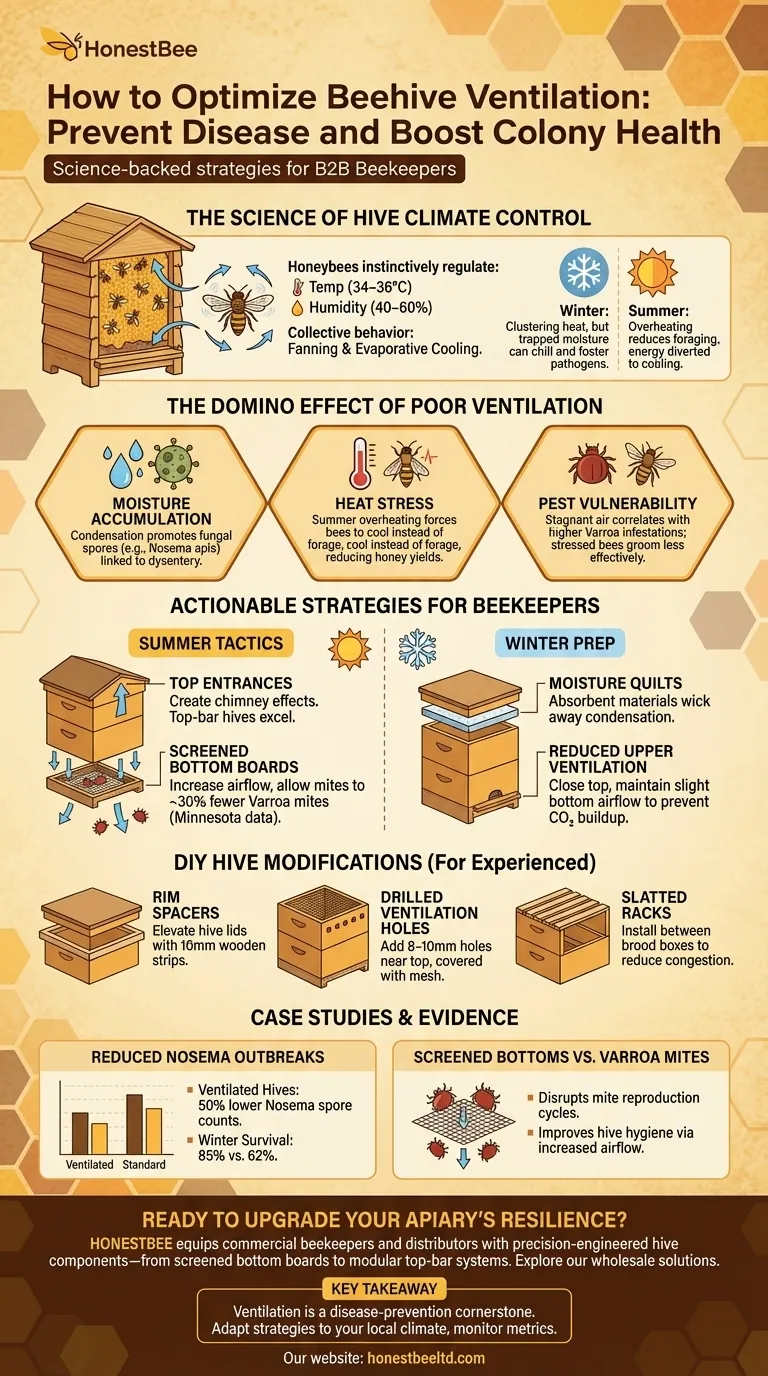
Honeybees instinctively regulate hive temperature (34–36°C) and humidity (40–60%) through collective behaviors. Worker bees fan wings to circulate air, while water collectors distribute droplets for evaporative cooling. In winter, clustering generates heat, but trapped moisture from respiration can drip onto the colony, chilling bees and fostering pathogens.
The Domino Effect of Poor Ventilation
- Moisture Accumulation: Condensation promotes fungal spores like Nosema apis, linked to dysentery in overwintering colonies.
- Heat Stress: Summer overheating forces bees to divert energy from foraging to cooling, reducing honey yields.
- Pest Vulnerability: Stagnant air correlates with higher Varroa mite infestations, as stressed bees groom less effectively.
Actionable Strategies for Beekeepers
Seasonal Ventilation Adjustments
Summer Tactics:
- Top Entrances: Create chimney effects by adding upper hive entrances. Top-bar hives naturally excel here with their pitched roofs and hinged covers (see Case Studies).
- Screened Bottom Boards: Increase airflow while allowing mites to fall through. Minnesota apiaries reported ~30% fewer Varroa mites after adoption.
Winter Prep:
- Moisture Quilts: Absorbent materials (e.g., wood shavings) above inner covers wick away condensation.
- Reduced Upper Ventilation: Close top entrances but maintain slight bottom airflow to prevent CO₂ buildup.
DIY Hive Modifications for Airflow Optimization
- Rim Spacers: Elevate hive lids with 10mm wooden strips for passive ventilation.
- Drilled Ventilation Holes: Add 8–10mm holes near the top of hive bodies, covered with mesh to block pests.
- Slatted Racks: Install between brood boxes to reduce congestion and improve air circulation.
Pro Tip: Avoid DIY hive builds unless you’re experienced—poorly sealed joints can undermine ventilation efforts.
Case Studies and Evidence
How Ventilation Reduced Nosema Outbreaks
A 3-year Minnesota study compared hives with standard vs. enhanced ventilation (top entrances + moisture quilts). Ventilated colonies showed:
- 50% lower Nosema spore counts
- Higher winter survival rates (85% vs. 62%)
Screened Bottom Boards vs. Varroa Mites
Research indicates screened bottoms disrupt mite reproduction cycles by:
- Dropping phoretic mites through the mesh
- Improving hive hygiene via increased airflow
Ready to Upgrade Your Apiary’s Resilience?
HONESTBEE equips commercial beekeepers and distributors with precision-engineered hive components—from screened bottom boards to modular top-bar systems. Explore our wholesale solutions to build colonies that thrive in any season.
Key Takeaway: Ventilation isn’t just about comfort—it’s a disease-prevention cornerstone. Adapt these strategies to your local climate, and monitor hive metrics to fine-tune your approach.
Visuelle Anleitung
Ähnliche Produkte
- Runde Bienenkorbentlüfter aus Edelstahl zur Belüftung
- Innere Abdeckung des Bienenstocks für die Imkerei Innere Abdeckung des Bienenstocks
- Professioneller umkehrbarer Bienenstockeingang
- Stahl-Rundscheiben-Eingangsreduzierer für Flexzion Bienenstock Nuc Box Gate
- Professionelle isolierte Bienenstöcke aus Kunststoff
Ähnliche Artikel
- Jenseits der Bienenkiste: Warum Ihre erste Imkereiinrichtung Ihren Erfolg bestimmt
- Der stille Killer im Bienenstock: Warum Feuchtigkeit, nicht Kälte, die größte Bedrohung im Winter darstellt
- Die Präzision des Chaos: Navigation durch die biologischen Risiken des kommerziellen Bienenstocktransports
- Überwinterung: Ein Bienenstock ist kein Haus
- So wählen Sie den besten Bienenstocktyp für Ihr Klima und Gelände aus